black and white bed linen

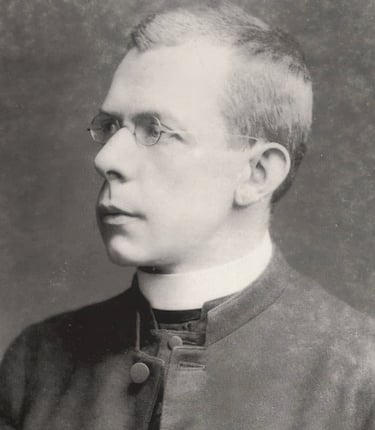
Father Thomas Byles

'Saint of the Titanic'

This page is dedicated to the cause for the Beatification of Rev. Thomas Byles, who twice refused a lifeboat to remain with passengers on the sinking RMS Titanic, and perished.

Honoring Rev. Thomas Byles

The sinking of the ship RMS Titanic on 15 April 1912 has become a well-known event in world history and the subject of numerous books and films. It was a tragic incident in which 1,496 people lost their lives on the maiden voyage of a ship believed to be unsinkable. One of the passengers aboard the Titanic on that fateful voyage was Fr Thomas Byles.

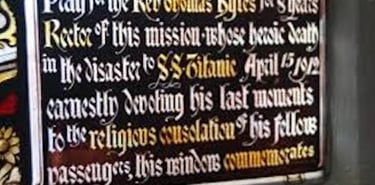
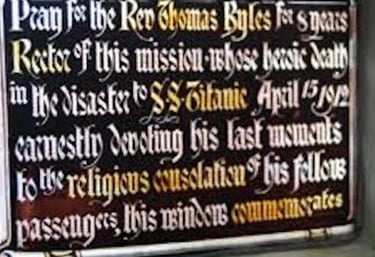
After Fr. Byles’ death on the Titanic, St. Pius X reportedly described him as a “martyr.” A plaque at his onetime parish recalls his “heroic death in the disaster,” after “earnestly devoting his last moments to the religious consolation of his fellow passengers.”

Family

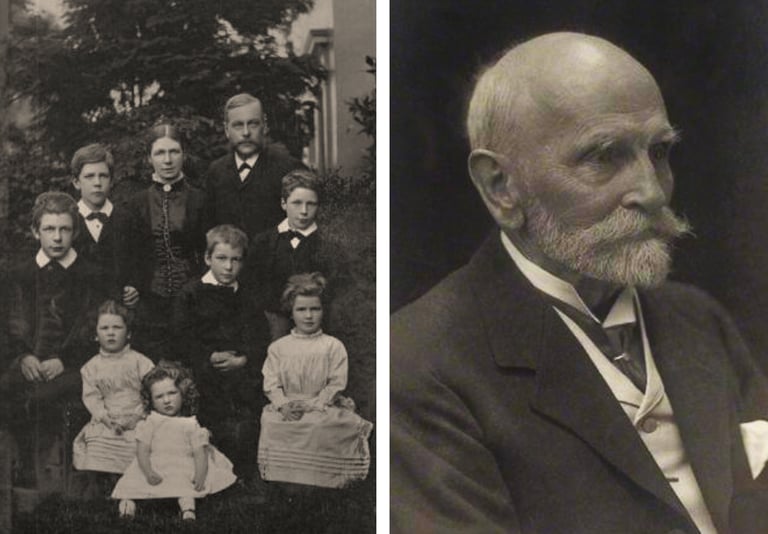
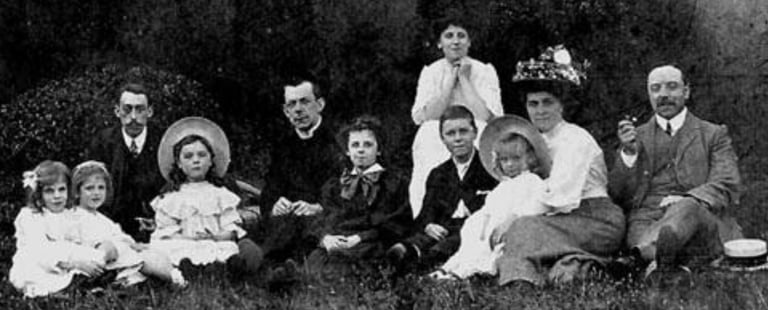
The Byles family from left standing: Roussel, Winter, Louisa, William, Alfred & Lawrence; seated: Hilda, Helen & Mary. Sir William Pollard Byles MP.

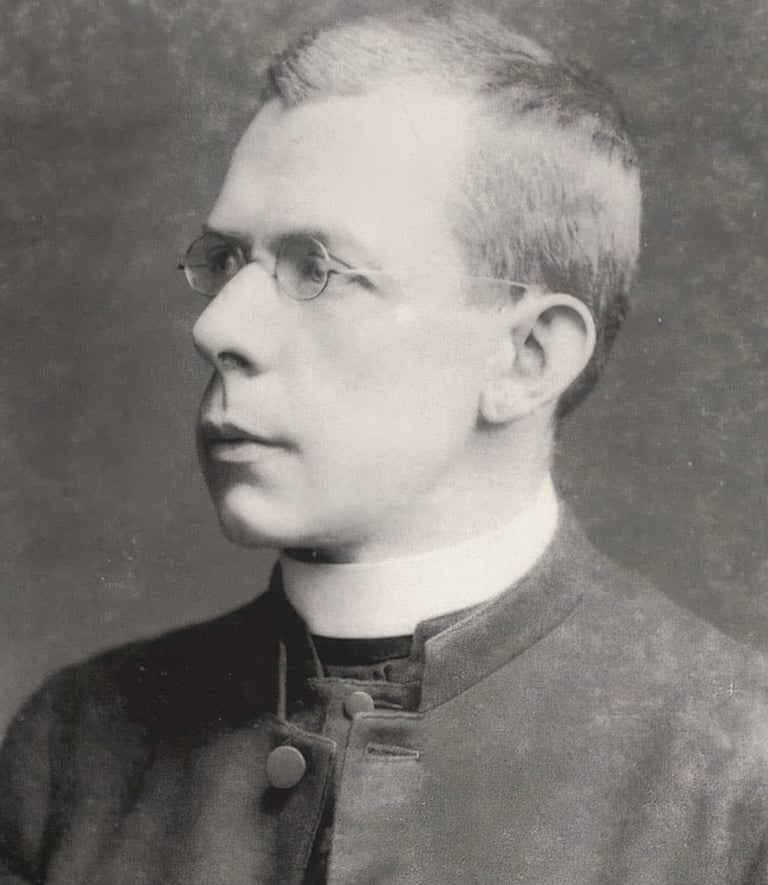
Thomas Roussel Davids Byles was born on 26 February 1870 at Grosvenor-road, Headingley, England. His parents were Alfred Holden Byles and Louisa Davids, and he was the eldest of their seven children.

His father, the Reverend Dr. Alfred Holden Byles, worked as both a congregational Minister and a successful businessman. He served as the first pastor of Headingley Hill Congregational Church in Leeds. Family records indicate their home address as York Road Council Schools, Leeds, Yorkshire. During the 1890s, he ministered at Shelton-Hanley in Stoke-on-Trent and also spent time in Omaha, Nebraska, USA, accompanied by his wife and two children (a daughter and their son Winter). While in America, he provided a pulpit for the First Congregational Church in Omaha. The family subsequently returned to England. The Reverend Byles senior passed away on 8 December 1911.

Byles had an uncle, Mr F. Byles, who resided in Bradford. Another uncle, Sir William Pollard Byles (1839–1917), was born in Bradford and became a radical, social reformer, and member of Parliament representing Salford North (elected in 1906). One of Roussel's sisters served as a missionary in China.

Education

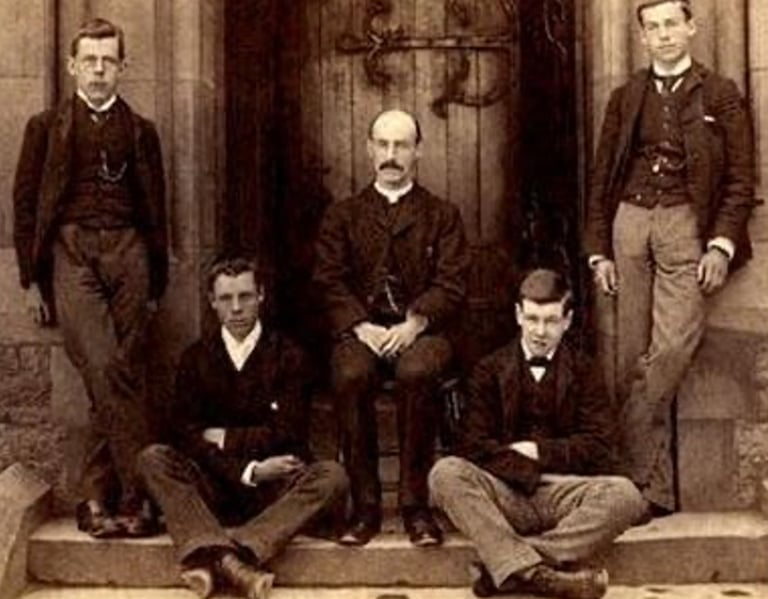
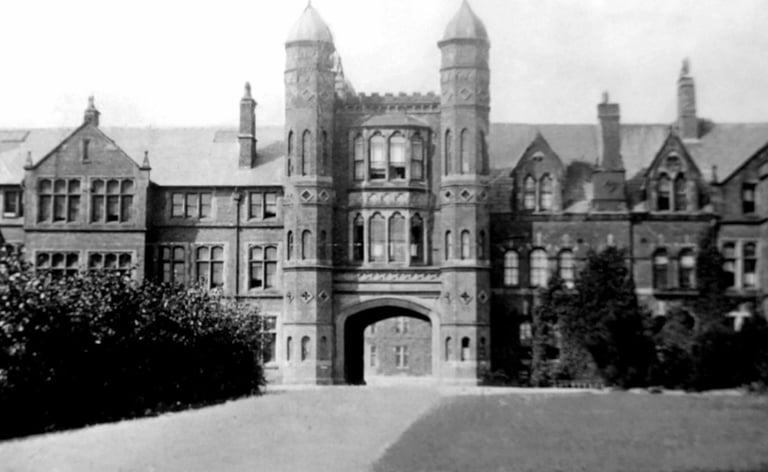
Roussel Byles was educated at Leamington College and Rossall School, Fleetwood, Lancashire. Here, between 1885 and 1889 he gained many prizes, particularly in mathematics, in which he won the chief honours for three years in succession.

In 1889 he went to Balliol College, Oxford, where he studied mathematics, modern history and theology. He was also Vice-President of the
Arnold Society, a select undergraduate debating society at Balliol. While studying at Oxford he converted to Catholicism.

Apparently Roussel was not an outstanding student. In his intermediate examination it appears that he got Third Class Honours (scholars were expected to do better), then changed subject to modern history in which he also got Third Class Honours, and then in the following year he took finals in theology and got a Third in that too!

He graduated with a Bachelor of Arts (BA) degree in 1894 and left Oxford after his final examinations. Firstly he went to Manresa, Spain, for a retreat, and then travelled to southern Germany to join his brother, then studying at Tübingen.

In September that year Roussel went to the monastery at Büron, Switzerland, for about a month. While there he accepted the position of tutor to the second son of Prince von Waldburg-Wolfegg- Waldstein.

The next few months were spent visiting religious houses, and in prayer and resting in Yorkshire. Having decided to study for the priesthood he went to the seminary at Oscott, near Birmingham, but found the climate harmful to his frail health. After a few months he was hired as a professor at St Edmund's.

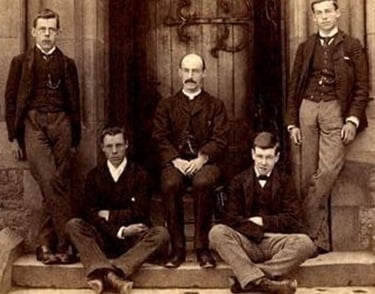
Roussel Byles (left) at Rossall School.

Time at St Edmund’s

Roussel continued his own studies as well as acting as a schoolmaster. In this latter capacity he was not very successful, according to his obituary in The Edmundian, but in other ways he did some useful work.

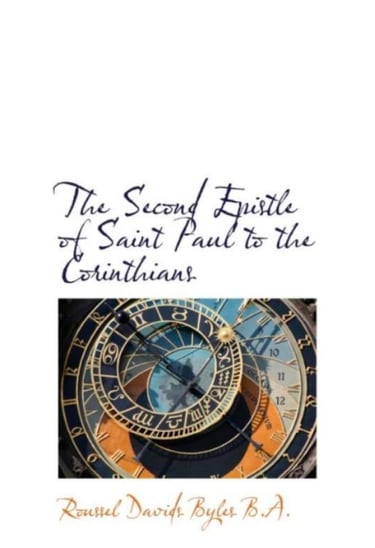
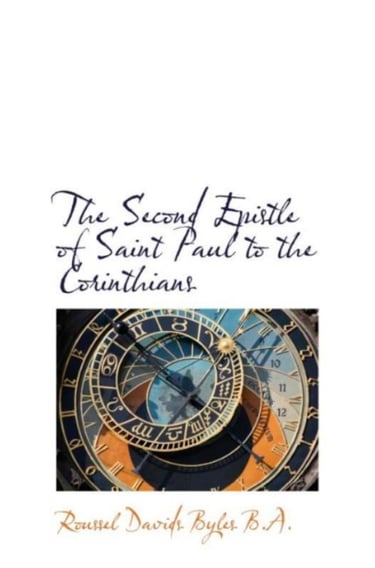
In 1897 he wrote A School Commentary on the Second Epistle of St Paul to the Corinthians, his only published work. Originally priced at one shilling, and 90 pages in length including a map, it was part of a series of handbooks then planned. The book is still in print.

Roussel also oversaw the re-arrangement and cataloguing of the Library and had a bonfire in the grounds to dispose of unwanted books! However, the College offered few scholarly challenges for a highly-educated man like Roussel, who had spent five years at university in Oxford. His close friend Mgr Edward Watson (OE 1883~1902) recalled:

“Fr Byles' independence of character was sometimes strained into too great self- confidence, his clear and strong convictions left little patience for those who differed. He was argumentative to a 't.' I see him now pursuing an already vanquished opponent from seat to seat in the common room at St Edmund's to insist on the dotting of the last 'i'.”

Roussel it would appear was not in generally good health, and his letters allude to occasional breakdowns and fits. In September 1897 he wrote:

“I hope to enter some Religious Order early in next year, but I want to wait a little, partly because I have not yet found out which Order I am best fitted for, and partly because my doctor tells me that by next February, if I have not recurrence, I may consider myself quite cured of my fits, and till that is safe it would probably be difficult to find any Order willing to accept me.”

He stayed at St Edmund's for five years.

After St. Edmund’s

In 1899 Roussel travelled to Rome to study for the priesthood at the Beda College. He received a Bachelor of Divinity (BD) degree from the Gregorian University in 1901 and was ordained priest on 15 June 1902 in the Church of St Apollinaris. It was when he became a priest that he adopted the name Thomas.

The first few months of the priesthood of Fr “Thomas” Byles were spent in Rome, and he finished his studies there in 1903. On his return to England, it was at first proposed that Fr Byles should resume his work at St Edmund's, but he was afraid of the strain of College life, and instead took up parish work. In February 1903 he went to live in Longcott, Gunnersbury, west London, as one of the five founding members of the Catholic Missionary Society, a group dedicated to the conversion of English Protestants to the Catholic Faith.

He was then moved to Our Lady Immaculate and the Holy Archangels in Kelvedon, Essex, for a short time. In 1905 he was assigned to St Helen's in Ongar, Essex.

Ongar was a vast country parish, including the towns of Epping and Ongar and many villages, which had a tiny church and very few people. Fr Byles was devoted to his poor congregation. He was known as a learned man, a good preacher, and a caring priest to his people. When they expressed an interest in the sport, he even taught boxing to some young men of the parish, in a shed behind the church!

Entirely through his efforts the church at Ongar flourished, and the attendance at Mass greatly increased. On his bicycle, he took the greatest trouble in going round and finding where Catholics lived. Many improvements were made in his time at the little church, including the building of a sacristy. Fr Byles was described by a member of his congregation as an interesting conversationalist and a bright and witty speaker. It was said of him that he had many friends and not a single enemy. He was a fine mathematical scholar, at home in chemistry and other sciences, a clever linguist, and greatly interested in politics, in which he was well versed, his uncle being an MP.

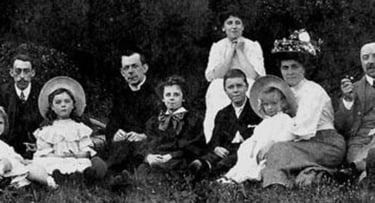
Fr. Byles with friends.

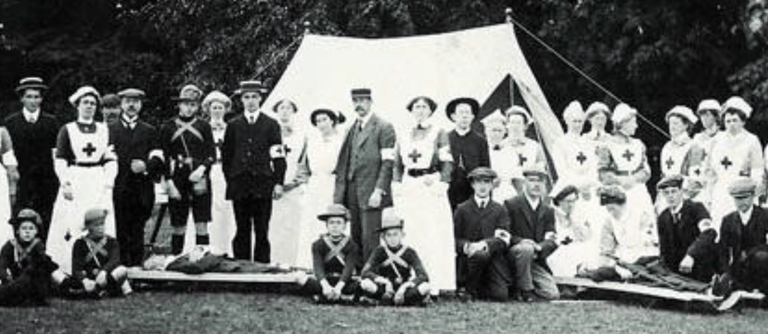
Fr. Byles with the Ongar Red Cross detachment.

RMS Titanic

The Titanic was the largest ship afloat at the time of her maiden voyage. One of three Olympic class ocean liners operated by the White Star Line, she was built between 1909 and 1911 at the Harland and Wolff shipyard in Belfast. She carried over 2,200 people – 1,316 passengers and about 900 crew.

Her passengers included some of the richest people in the world, as well as over a thousand emigrants from Ireland, Scandinavia and elsewhere seeking a new life in America.

The ship was designed to be the last word in comfort and luxury, with an on-board gymnasium, swimming pool, libraries, restaurants and opulent cabins. She also had a powerful wireless telegraph system provided both for the convenience of the passengers and for operational use.

Although she had advanced safety features such as watertight compartments and remotely activated watertight doors, she lacked enough lifeboats to accommodate all of those aboard. Due to outdated maritime safety regulations, she carried only enough lifeboats for 1,178 people - half of her total passenger and crew capacity.

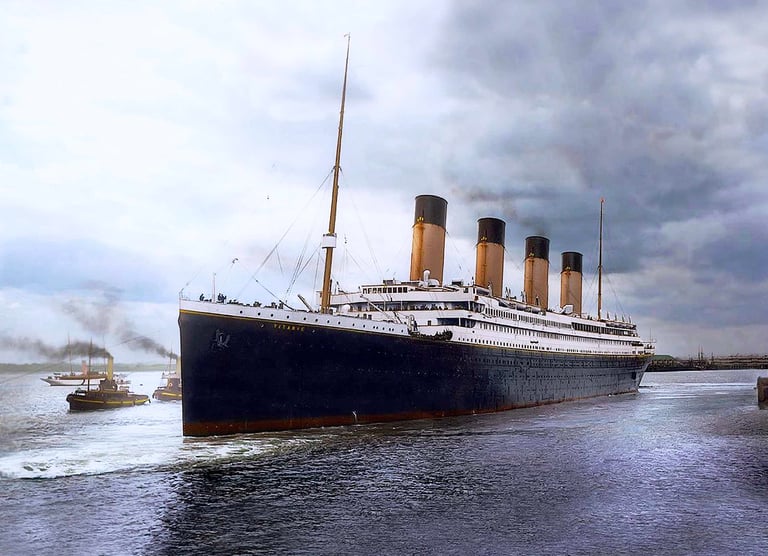
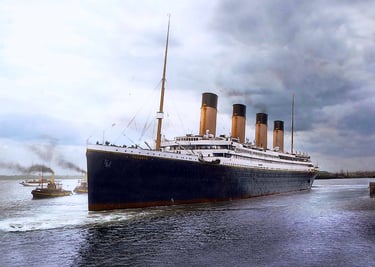
Titanic departing Southampton, Wednesday April 10, 1912.

Fr Byles' younger brother William had also converted to Catholicism, and had moved to America to run a rubber business and became engaged to Miss Isabel Katherine Russell of Brooklyn, New York. When they decided to marry, William asked his brother to officiate at the ceremony, which was planned to take place at St Augustine's Catholic Church, Brooklyn, on Sunday 21 April 1912. Fr Byles and his brother Winter, who was also living in America by that time, made arrangements to travel to New York. Fr Byles was initially scheduled to travel on another White Star Line vessel but switched at the last minute to the Titanic. His second class ticket was number 244310 and cost £13 (the equivalent of about £1,100 today) and was reputedly bought for him by his parishioners.

On Easter Monday in 1912, just two days before Fr Byles set sail, his friend Mgr Watson from Brentwood was visiting. Conversations that evening ranged from the size of the trunk that Fr Byles should take, to the anxieties he had about his parish in Ongar. They spoke much of the Titanic, the voyage and its safety. It was then that Mgr Watson remembered and emphasised the danger of icebergs at that time of year. As they parted company, Mgr Watson recalled telling Fr Byles “I hope you'll come back again”.

In The Edmundian magazine in July 1912, Mgr Watson wrote:

“I recall as characteristic our last conversation, on Easter Monday, two days before he sailed, when the packing was going on. As the regulation space was more than he needed would it be better to fill up with the larger trunk? I thought it would, because he would want space to bring back purchases. So he went and finished off with the smaller saying he was not going to buy in the States where everything was so much dearer than here.”

Fr Byles would have arrived from Essex at Liverpool Street Station, the station that served the east of the country. He would have then taken a taxi, omnibus or the London Underground to Waterloo Station (Platform 12) where he would have joined the Boat Train for Southampton. He boarded the Titanic at Southampton on 10 April 1912.

There were three priests on the Titanic. Fr Byles was the only one who could speak English well. The other priests were Fr Juozas Montvila from Lithuania and Fr Joseph Peruschitz from Bavaria, Germany. All three said Mass for the passengers every day onboard the ship.
Last Letter

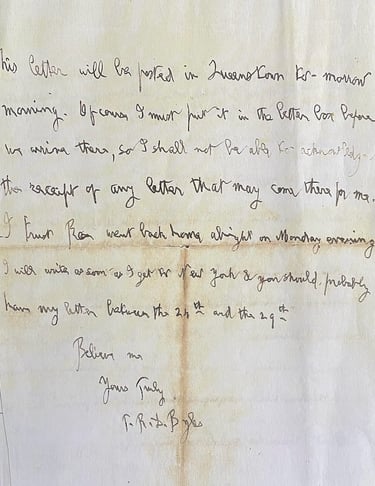
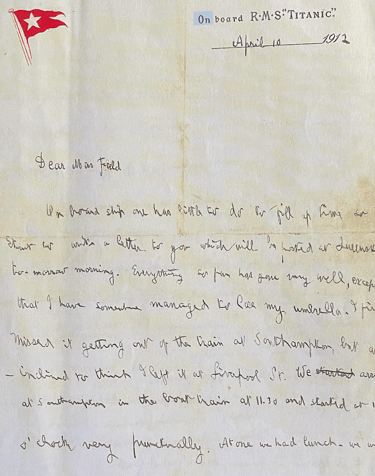
A few hours after setting sail, while the Titanic was anchored at Cherbourg in northern France, Fr Byles wrote to his housekeeper, Miss Field, back at his parish in Ongar:

"Everything so far has gone very well, except that I have somehow managed to lose my umbrella. I first missed it getting out of the train at Southampton, but am inclined to think that I left it at Liverpool St. We arrived at Southampton in the boat train at 11.30 and started at 12 o'clock very punctually. At one we had lunch. We were then still in Southampton Water, but when we came out of lunch we were between Portsmouth and the Isle of Wight.

Before coming out of supper we had stopped at Cherbourg, and the tender was just coming alongside with passengers. The tender is a good sized boat of 1260 tons, but by the side of the Titanic she looks as though with a good crane we could lift her out of the water and lay her on deck without feeling any inconvenience.

When you look down at the water from the top deck, it is like looking from the roof of a very high building.

At the time of writing 7.45 we are still stopping at Cherbourg. The English channel was decidedly rough to look at, but we felt it no more in the roughest part than when we were in Southampton Water. I do not much like the throbbing of the screws but that is the only motion we feel...I shall not be able to say mass to-morrow morning, as we shall be just arriving at Queenstown ... I will write as soon as I get to New York..."

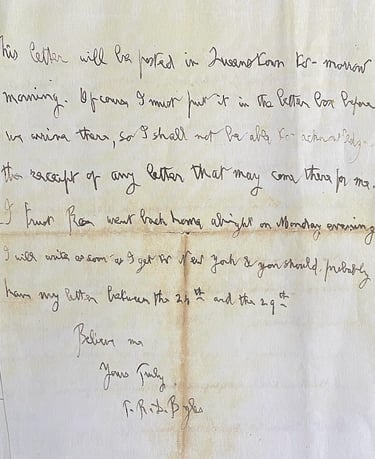
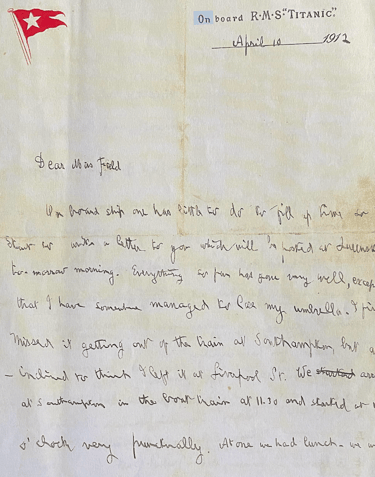
Letter written on board RMS Titanic, April 10, 1912. Collection of Joan Byles Barry.

The Sinking

He spent most of Saturday 13 April hearing confessions. On the Sunday, all three priests said Mass. For this they had to thank the foresight of Fr Byles, who had brought with him a portable altar, with all accessories, borrowed from his friend Mgr Watson. Fr Byles had made arrangements with Captain Smith to have the use of a room in the steerage part of the vessel, so that the Catholics on board could hear Mass. Fr Byles said Mass first for the second class passengers in their lounge and then for the third class passengers.

It was perhaps natural that, preaching in mid-Atlantic, he should have dwelt on a nautical subject. He preached in English and French on the need for men to have a lifebelt in the shape of prayer and the sacraments to save their souls when in danger of being lost in spiritual shipwreck in times of temptation, just as men require a lifebelt to save themselves when their lives are in danger of being lost in an actual shipwreck.

Being one of the very few passengers willing to brave the cold, Fr Byles had been reciting the Breviarium Romanum, dressed in his priestly garb, while walking back and forth on the upper deck at the moment the Titanic struck an iceberg.

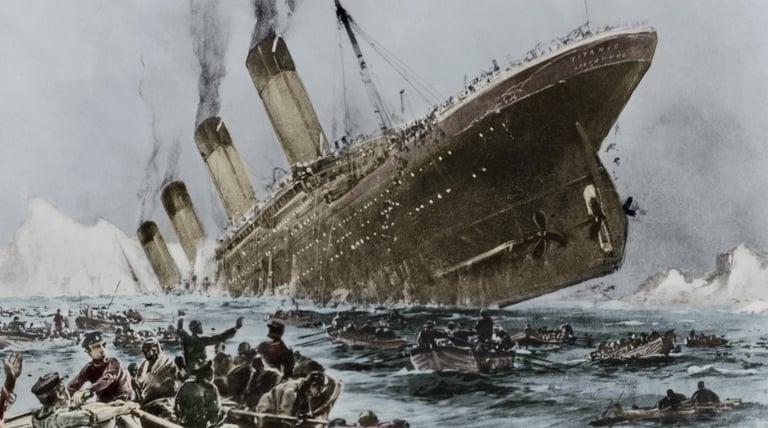
A 1912 engraving by Willy Stöwer showing the sinking of RMS Titanic on 15 April 1912 in the Atlantic after hitting an iceberg.

The Titanic was sailing about 375 miles south of Newfoundland when she hit the iceberg, four days into the crossing, on 14 April 1912. The glancing collision caused the Titanic's hull plates to buckle inwards in a number of locations on her starboard side and opened five of her sixteen watertight compartments to the sea.

Over the next two and a half hours, the ship gradually sank as she filled with water. Passengers and some crew members were evacuated in lifeboats, many of which left the ship only partially full!

A disproportionate number of men - over 90% of those in second class - were left aboard due to a "women and children first" protocol for the lifeboats. Just before 2.20am, the Titanic broke up and sank bow-first with over a thousand people still on board. Those in the water died within minutes either by drowning or from hypothermia caused by immersion in the freezing ocean. The 710 survivors were picked up from their lifeboats by the RMS Carpathia a few hours later.
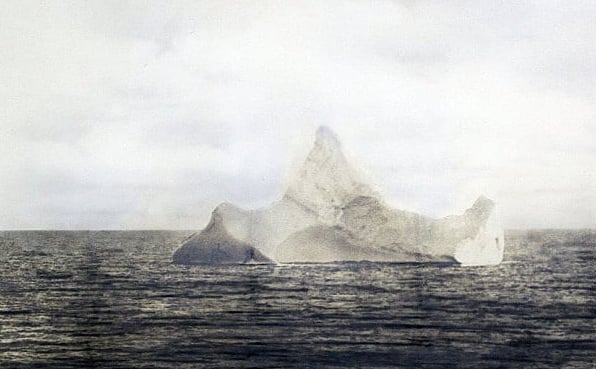
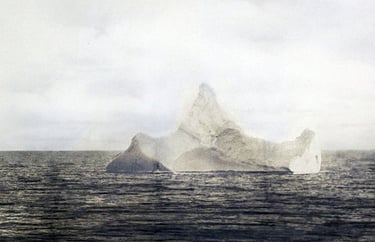
One of the many icebergs suspected of having sunk the Titanic photographed in the morning of April 15, from the "Prinz Adalbert".

Fr Byles’ Role

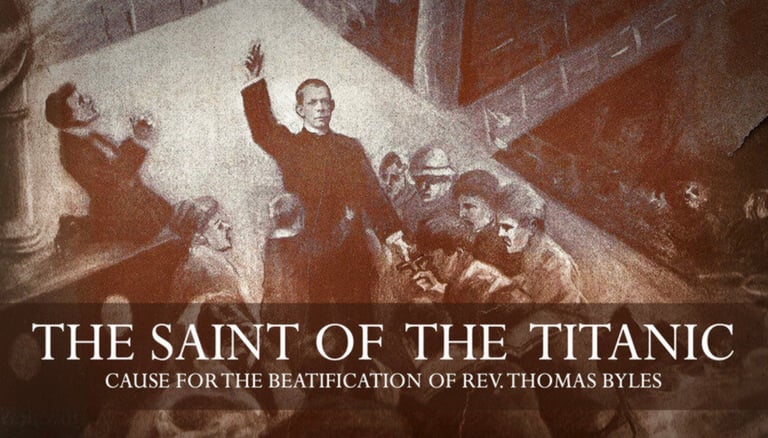
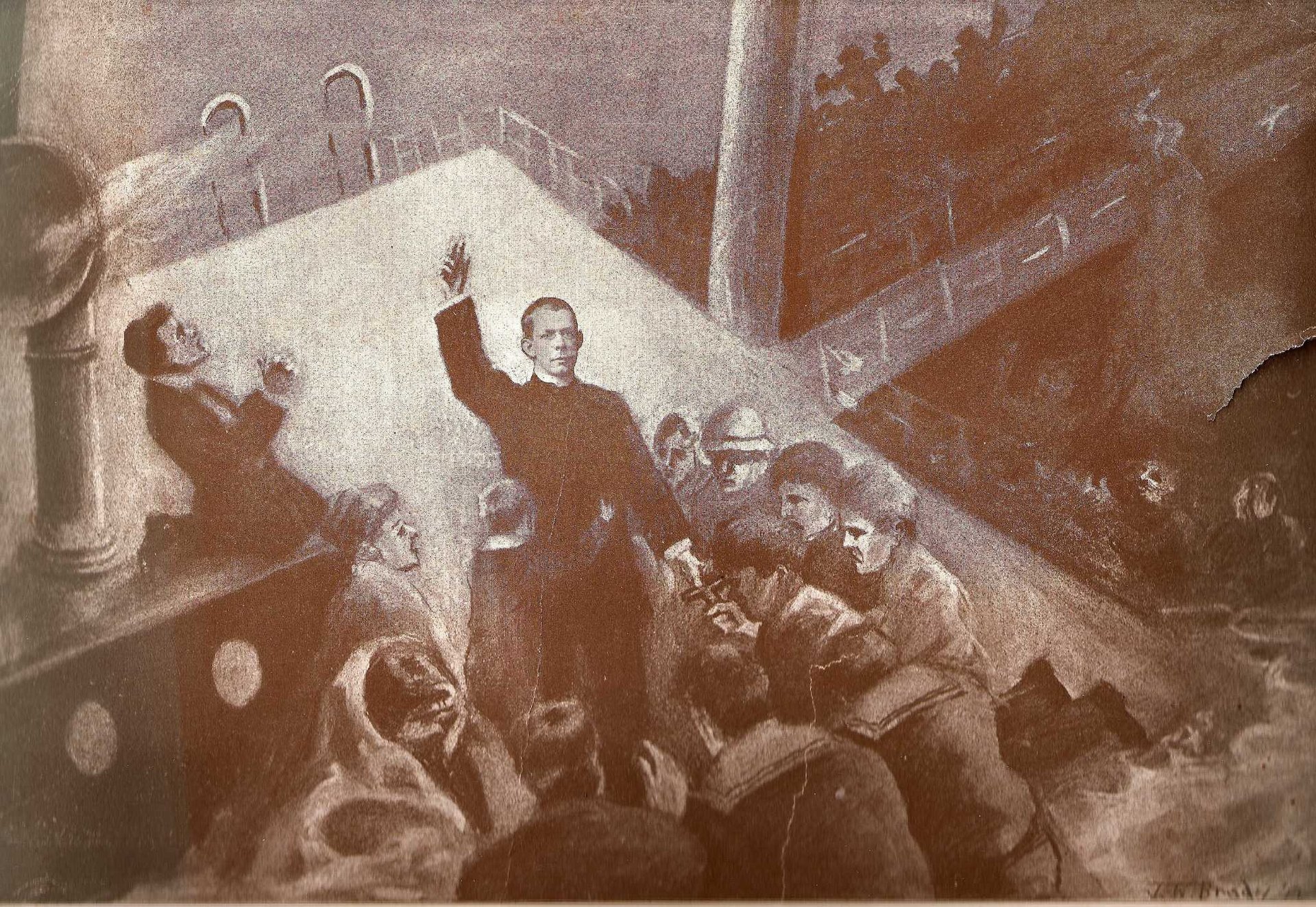
By all accounts, Fr Byles was twice offered a seat in a lifeboat but refused. After the last lifeboat had gone, he went to the aft end of the boat deck and led the recital of the Rosary for a large group kneeling around him. Fr Byles also exhorted the people to prepare to meet God. As 2.20am approached, and the stern rose higher and higher out of the sea, Fr Byles led the more than one hundred people kneeling before him in the Act of Contrition and gave them general absolution.

Witnesses gave testimony of Fr Byles' bravery while the ship was sinking:

"When the crash came we were thrown from our berths ... Slightly dressed, we prepared to find out what had happened. We saw before us, coming down the passageway, with his hand uplifted, Father Byles. We knew him because he had visited us several times on board and celebrated mass for us that very morning. 'Be calm, my good people,' he said, and then he went about the steerage giving absolution and blessings.... A few around us became very excited and then it was that the priest again raised his hand and instantly they were calm once more. The passengers were immediately impressed by the absolute self-control of the priest. He began the recitation of the rosary. The prayers of all, regardless of creed, were mingled and all the responses, 'Holy Mary,' were loud and strong. He calmly asked them to join with him in prayer. Many did so - non-Catholics as well as Catholics - and when last seen, he was reciting the Rosary with them.”

Recalled another witness:

“After I got in the boat, which was the last one to leave, and we were slowly going further away from the ship, I could hear distinctly the voice of the priest (Byles) and the responses to his prayers. Then they became fainter and fainter, until I could only hear the strains of ‘Nearer My God, To Thee’ and the screams of the people left behind.”

Fr Thomas Byles perished in the freezing water. His body was never recovered.

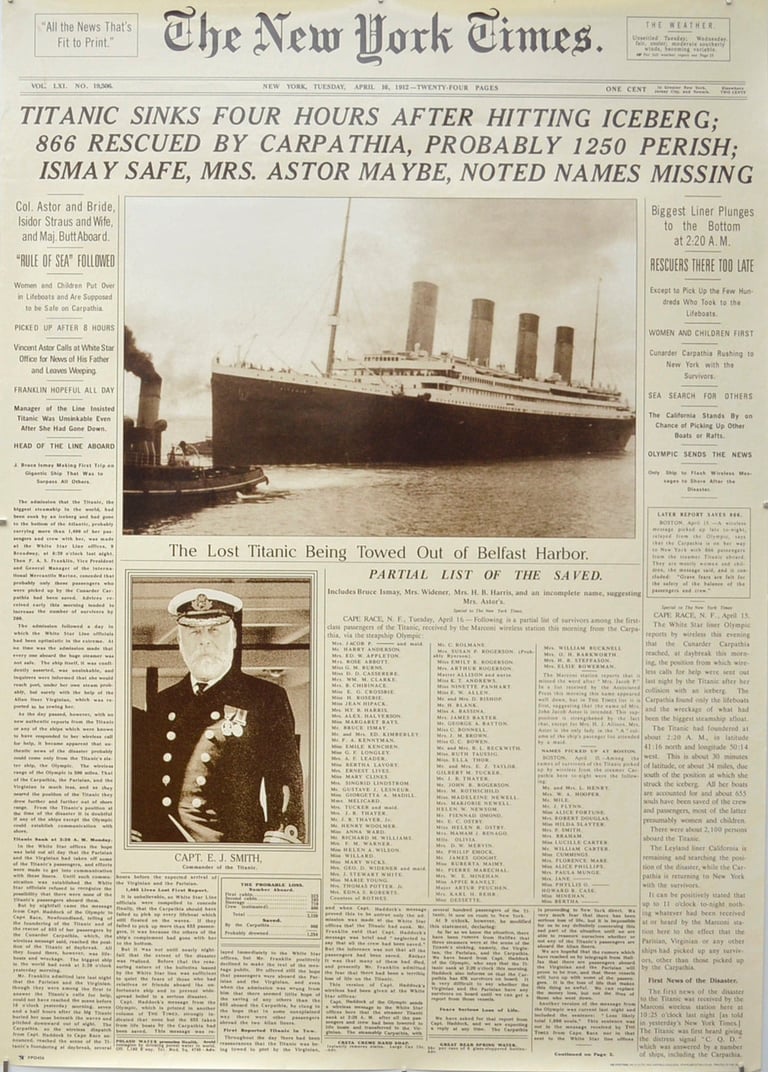
Cover of the New York Times newspaper with the sinking of the RMS Titanic ship as the headline, 1912

In Memoriam

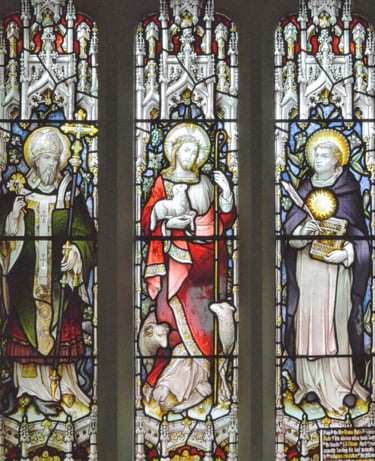
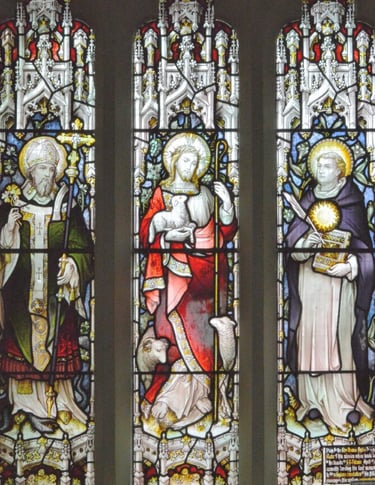
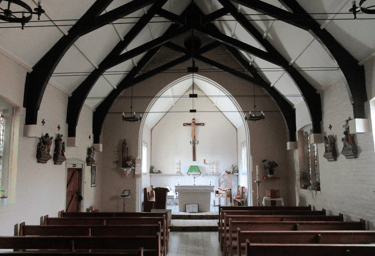
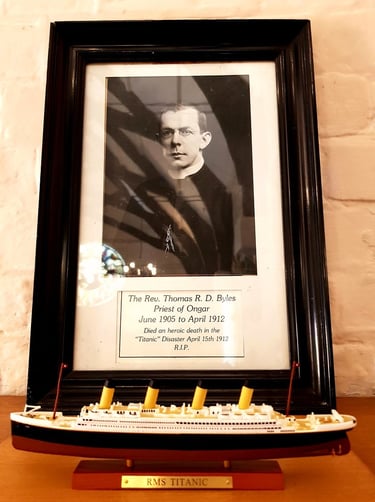
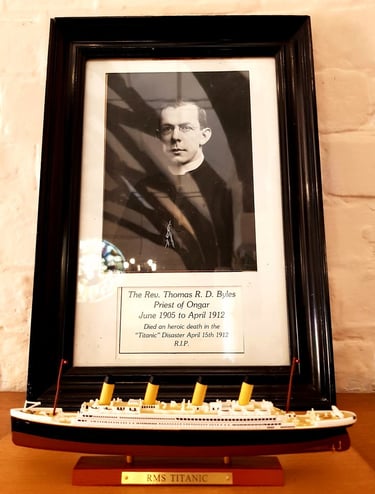
A door installed by his brothers at St Helen’s Church in Ongar, stands as another memorial to Fr Byles. Also in the church, a photograph and stained glass window were placed to commemorate his heroism. The window dedicated to him shows St Patrick, the Good Shepherd, and St Thomas Aquinas.

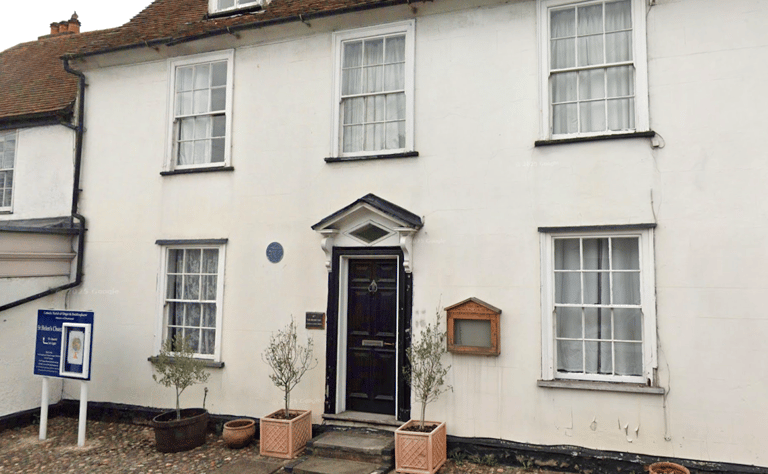
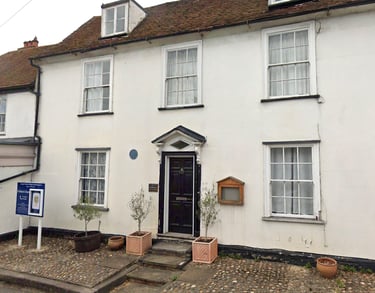
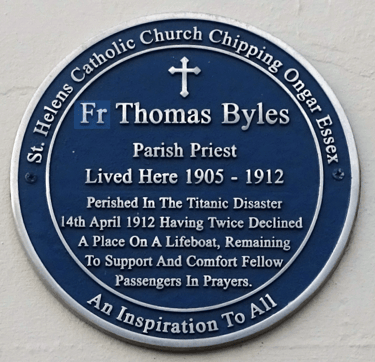
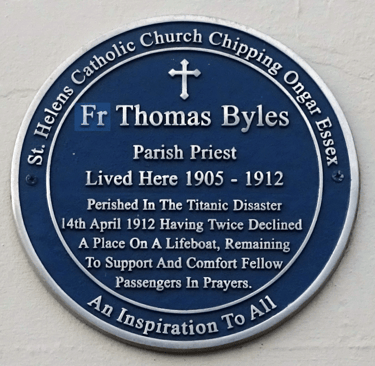
In 2011, St. Helens Catholic Church, Chipping Ongar, Essex placed a blue plaque which reads: 'Fr Thomas Byles parish priest lived here, 1905 - 1912. Perished in the Titanic disaster, 14th April 1912, having twice declined a place on a lifeboat, remaining to support and comfort fellow passengers in prayers. An inspiration to all.'

Home of Father Thomas Byles, 1905 - 1912. 87 High Street, Ongar, CM5 9DX, England. The church that erected the plaque is immediately behind this house, which is also used by the church.

Fr Alphonsus Arendzen (OE 1905-17) wrote the following tribute to Fr Byles:

"Fr Byles, a first-class scholar with a remarkable academic career, was also hampered with chronic illness, yet to silent humility he worked whenever his frail body would let him. He died on the Titanic, gathering the people around him and exhorting and absolving them, till the waves closed over him."

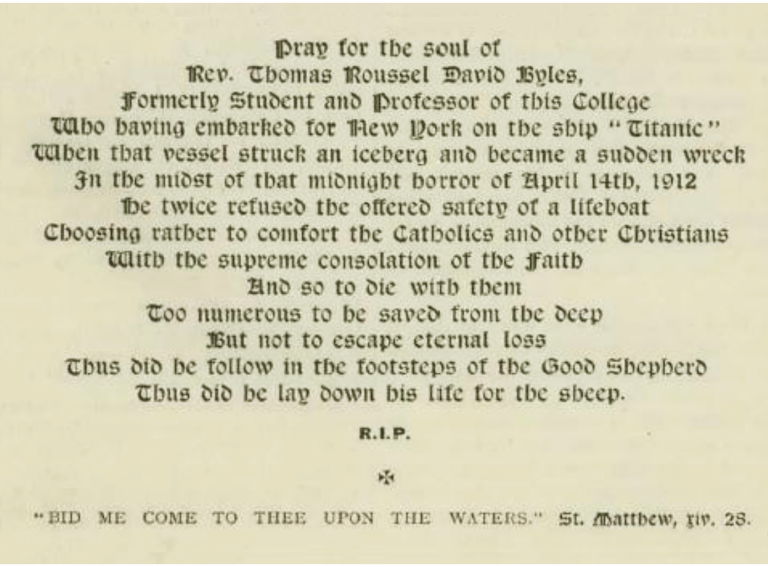
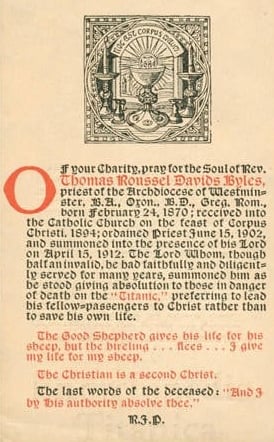
Memorial Card for Fr. Byles, courtesy Joan Byles Barry USA.

Popular Culture

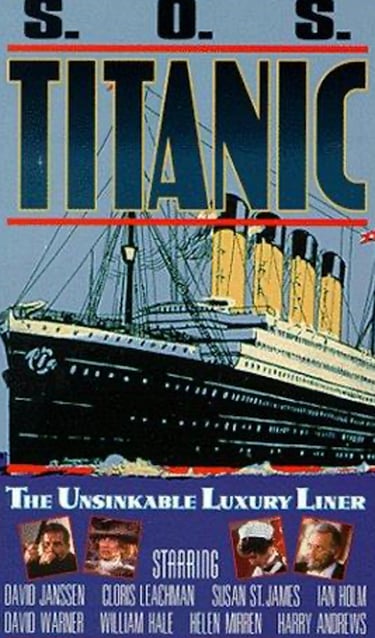
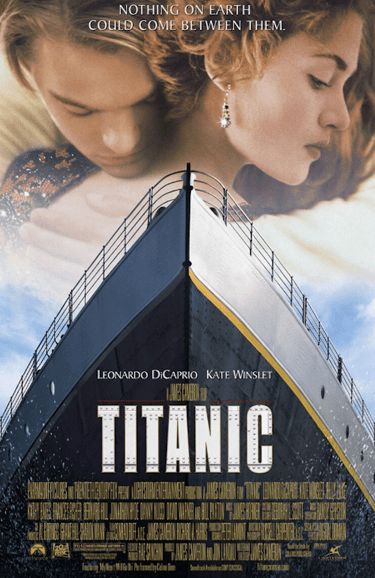
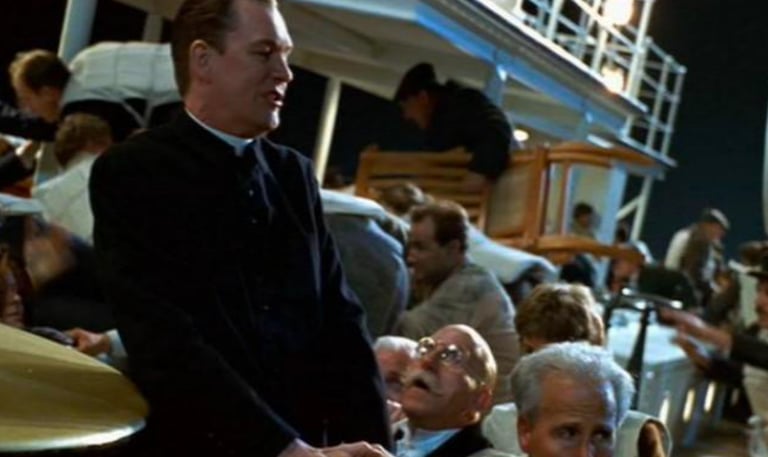
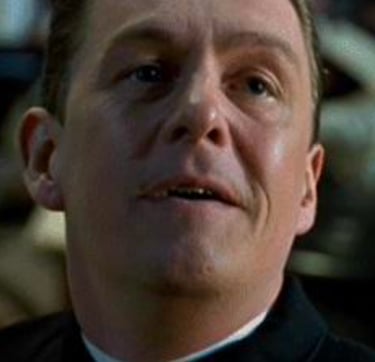
His final brave acts were recorded in the 1979 television film SOS Titanic, in which he was played by the actor Matthew Guinness; and in the 1997 film Titanic, in which he was portrayed by James Lancaster.

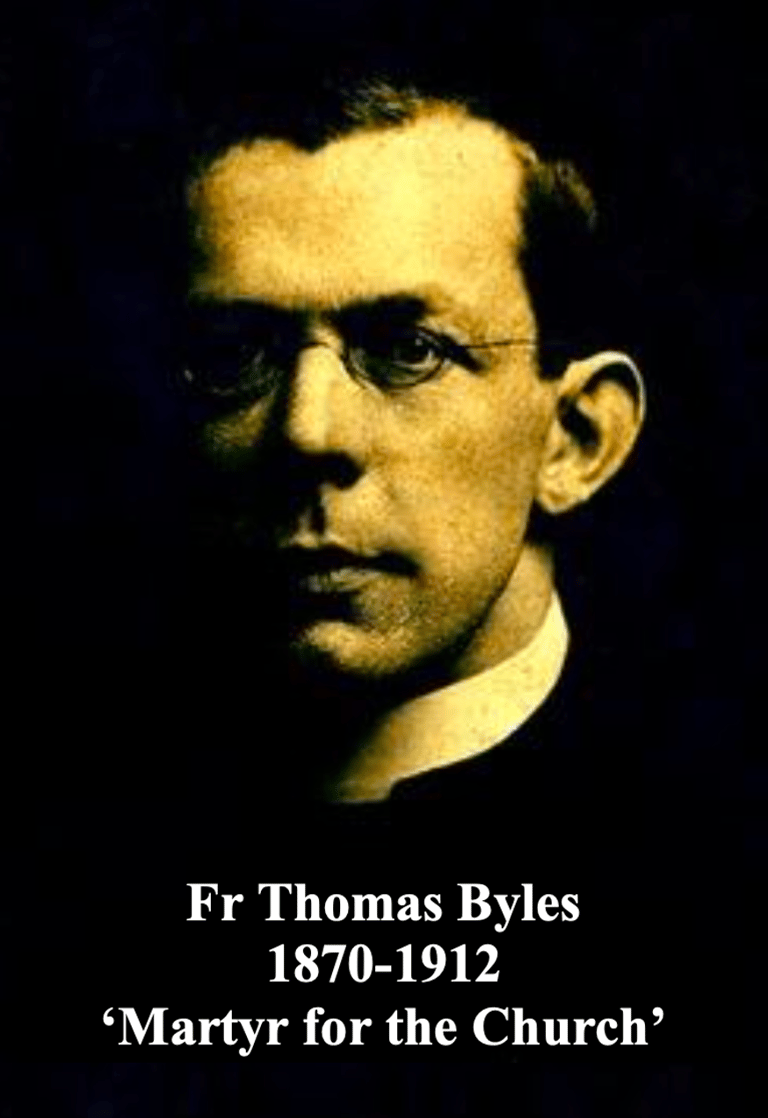
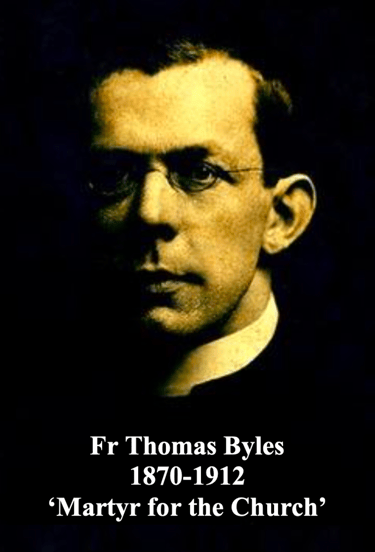
'Martyr for the Church'

Later in 1912, Katherine and William Byles travelled to Europe. They visited London and the Houses of Parliament to meet Sir William Pollard Byles MP. Katherine had to wait outside in a parlour, as women were not then allowed to enter. According to family legend, a young man came to her and said "Hello Mrs Byles, I am here to give you a tour, my name is Winston Churchill". However, as Churchill was working at the Admiralty between 1911 and 1914, it is debatable whether this could actually have been the case.
Throughout his short but varied life it was Fr Byles’ faith in God that underpinned everything he did. Despite being hampered by ill-health, his academic struggles and the demands of parish work, he had a clear vision of what was the right thing to do. His final acts of selflessness on the Titanic were the ultimate demonstration of that faith.

From London, Katherine and William Byles travelled on to Rome where they had a private audience with the Pope. At that meeting Pius X declared that Fr Byles had been a martyr for the Church.

As the stern sank, Father Byles raised his hand in one last act of blessing and absolution, Rosary and Crucifix in hand, to lead those gathered around him in prayer.
“Hold… Thy cross before my closing eyes… In life, in death, O Lord, abide with me.”

His body was never recovered.

Research by David J. S. Kay, President Emeritus, The Edmundian Association, March 2012.

Our Mission

Sharing the story of Rev. Thomas Byles’ heroic sacrifice aboard Titanic.

Sign The Petition

Supporting the cause to honor Rev. Byles as a saint for his selfless courage.

All signatories for this Cause will be included in the historical record for submission.

This petition created by Titanic New York, the world's largest RMS TITANIC descendant group.

Follow our Campaign

Preserving the memory of Fr. Byles on a private Facebook Group, Twitter and Instagram.

Media contact: info@saintofthetitanic.org

Privacy Policy: Titanic New York is committed to protecting your privacy. We do not collect or share your email address, IP address, or other personal information.

Donations: Change.org gives you the option to donate in order to promote this petition to make it more visible so more people might sign it.

Connect with us
An evocative image of the Titanic’s grand staircase, symbolizing the era and tragedy.
Candles lit in a church, representing prayers and remembrance for Rev. Byles.